
Easy Miso Soup Recipe- Quick & Delicious Japanese Comfort
Miso soup recipe. Ah, the humble miso soup. It’s more than just a starter; for so many of us, it’s a comforting embrace in a bowl, a taste of home, and a whisper of Japan’s culinary soul. Have you ever wondered what makes this seemingly simple broth so utterly captivating? It’s the magic of fermentation, the subtle umami depth that miso paste imparts, transforming plain water into a rich, savory elixir. We love miso soup because it’s incredibly versatile, endlessly customizable, and surprisingly nourishing. It’s the perfect palate cleanser, a gentle wake-up call for your taste buds, or a soothing companion to any meal. This particular miso soup recipe aims to capture that authentic, soul-warming essence, proving that creating delicious homemade miso soup is well within your reach.
Why You’ll Love This Recipe:
Effortless Elegance
Authentic Flavors
Quick and Nourishing
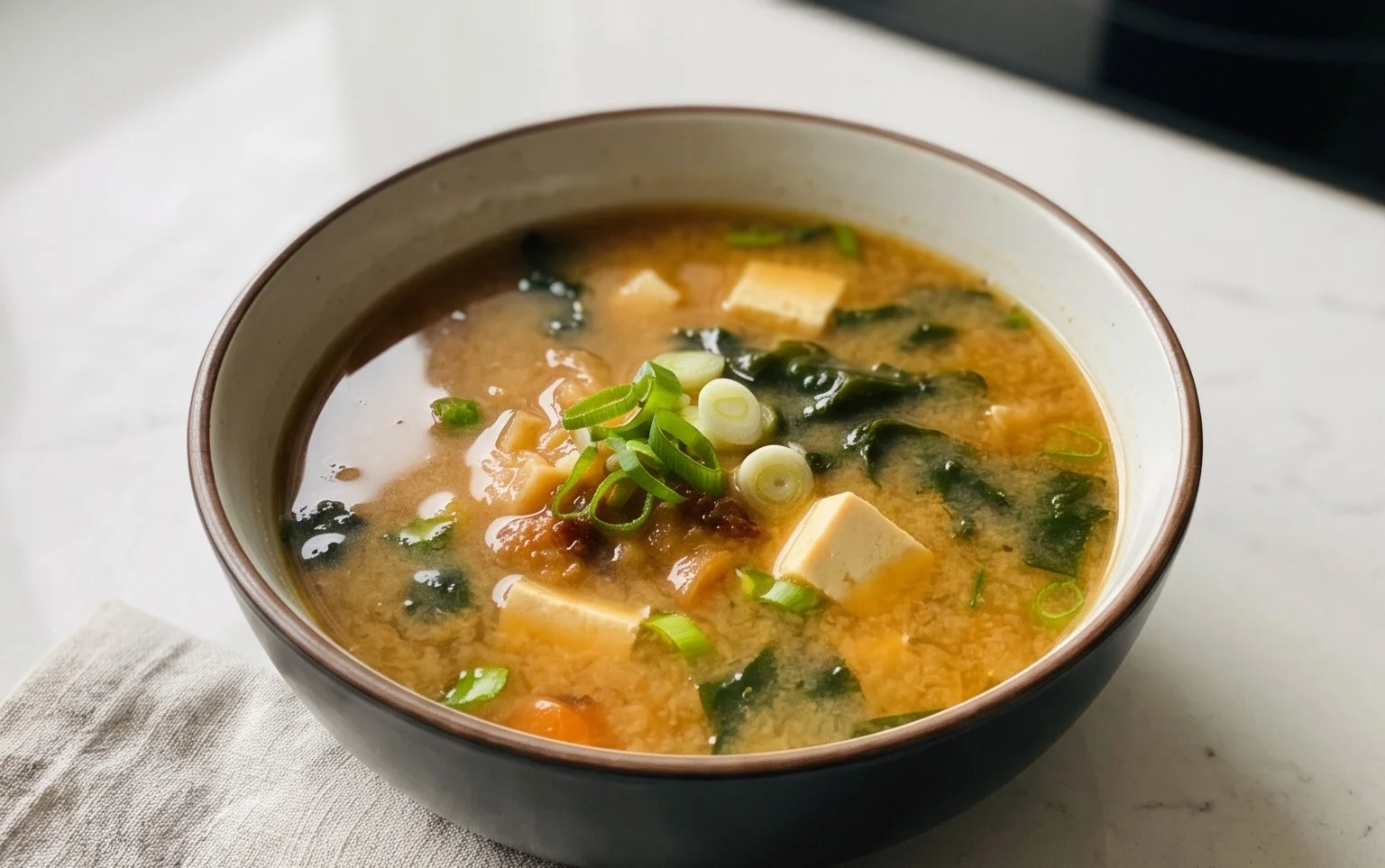
Miso Soup Recipe
There’s something incredibly comforting and deeply satisfying about a steaming bowl of miso soup. It’s more than just a starter; it’s a warm hug in a bowl, a delicate balance of umami flavors that can transport you straight to Japan. This recipe is my go-to for creating authentic, flavorful miso soup at home, and it’s surprisingly simple. You’ll find that with just a few key ingredients and a little care, you can whip up a batch that rivals anything you’d get at your favorite sushi restaurant. The beauty of miso soup lies in its simplicity and its ability to be customized, but this foundational recipe is a fantastic starting point.
Ingredients:
Now, let’s get to the magic of creating this delicious soup. The key to good miso soup is good dashi and good miso paste. Dashi is the foundational broth of Japanese cuisine, and while you can buy instant dashi granules, making it from scratch (or using pre-made liquid dashi) will elevate your soup significantly. As for miso paste, there are many varieties – white (shiro), red (aka), and mixed (awase). For a classic, balanced flavor, I often reach for awase miso, but white miso offers a milder, sweeter profile, and red miso a richer, more robust taste. Feel free to experiment once you’ve mastered this basic recipe.
Cooking Instructions
Preparing the Dashi and Seaweed
The very first step is to prepare your dashi. If you’re using instant dashi granules, simply dissolve them in the specified amount of hot water according to the package instructions. If you have liquid dashi concentrate, dilute it with hot water. For those feeling ambitious and wanting to make dashi from scratch, you’ll typically simmer kombu (dried kelp) and katsuobushi (dried bonito flakes) in water and then strain. It adds an extra layer of depth, but don’t let that deter you if you’re short on time. Once your dashi is ready, set it aside. Next, we’ll rehydrate the dried seaweed. In a small bowl, place the dried seaweed and cover it with a little warm water. Let it sit for about 5 to 10 minutes, or until it has expanded and softened. Once rehydrated, drain the excess water and set the softened seaweed aside. This seaweed will add a lovely oceanic texture and flavor to our soup.
Gently Heating the Broth
Now, pour your prepared dashi into a medium saucepan. Place the saucepan over medium heat. We want to bring the dashi to a gentle simmer. It’s crucial not to boil the dashi vigorously, as this can diminish its delicate flavor. A gentle simmer is all we’re aiming for. While the dashi heats up, carefully cut your silken tofu into small, bite-sized cubes. Silken tofu is very delicate, so handle it with care to avoid it breaking apart too much. If you find it a bit tricky to cut, you can also scoop it out with a spoon once it’s in the soup.
Adding the Tofu and Seaweed
Once the dashi is gently simmering, it’s time to add the prepared ingredients. Carefully slide the cubed silken tofu into the simmering dashi. Next, add the rehydrated and drained seaweed. Stir gently to distribute the tofu and seaweed evenly throughout the broth. Allow these ingredients to heat through for a few minutes. This is where the soup starts to come alive, with the tofu absorbing some of the savory dashi and the seaweed adding its unique chew.
Incorporating the Miso Paste – The Crucial Step
This is arguably the most important step in making miso soup, and it requires a little attention to avoid cooking out the beneficial probiotics and delicate flavor of the miso. Once the tofu and seaweed are heated through, reduce the heat to low. Do NOT let the soup come to a rolling boil from this point onwards. Ladle a small amount of the warm dashi broth into a separate small bowl. Add your miso paste to this bowl. Use a whisk or a fork to thoroughly dissolve the miso paste into the warm dashi, creating a smooth, lump-free paste. This process is called ‘tempering’ the miso and it prevents clumps from forming in your soup and ensures a smooth, even flavor.
Finishing and Serving
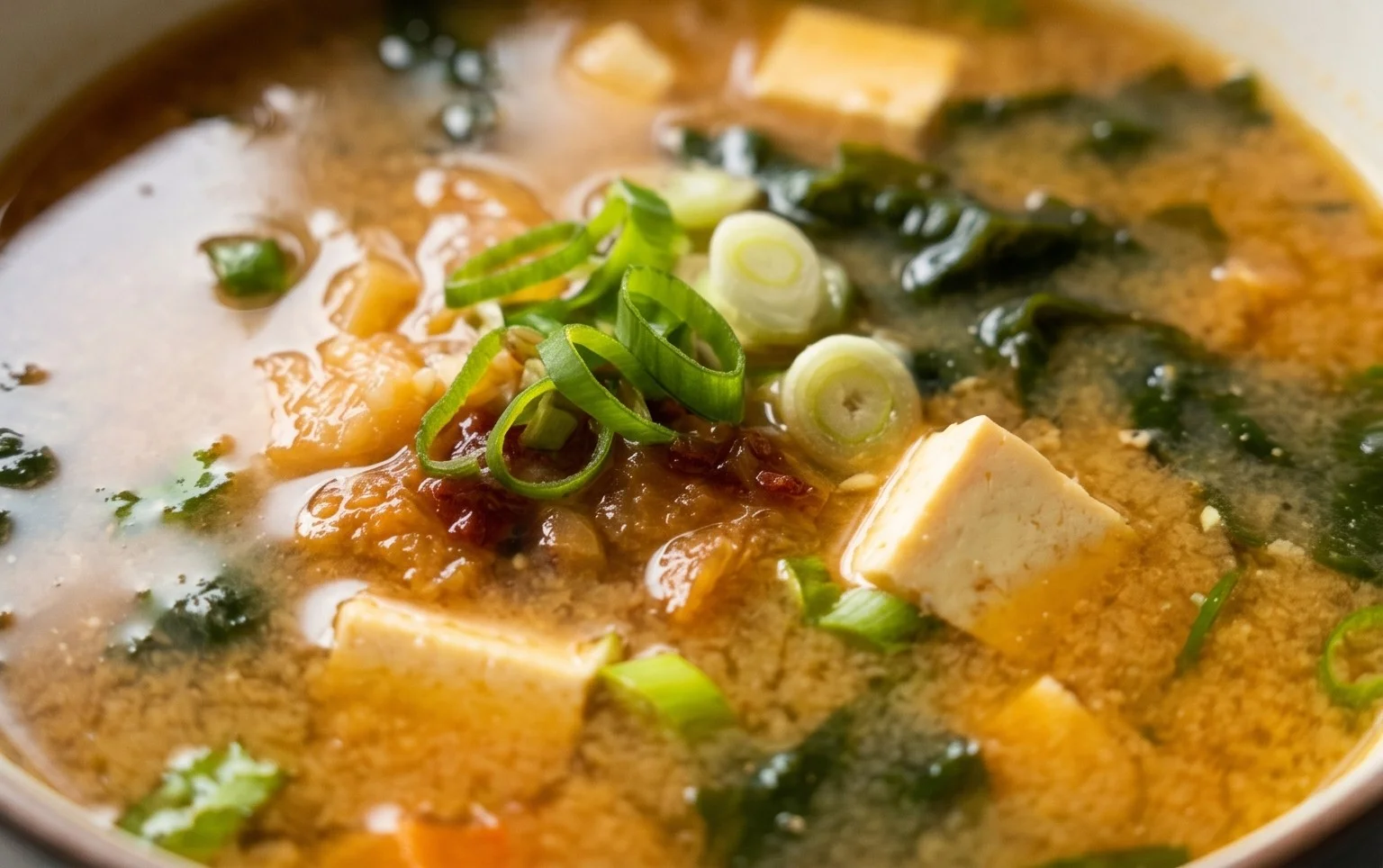
Once the miso paste is fully dissolved and you have a smooth mixture, gently pour this miso mixture back into the saucepan with the rest of the dashi, tofu, and seaweed. Stir gently to combine everything. Taste the soup. This is where you can adjust the seasoning. If you prefer a stronger miso flavor, add another half tablespoon of miso paste (dissolving it in a little warm dashi first, as described above) and stir it in. Continue to heat the soup very gently for another minute or two, just until everything is heated through. Again, resist the urge to let it boil. Ladle the hot miso soup into your serving bowls. Garnish generously with the freshly chopped scallions. The bright, fresh flavor and vibrant green color of the scallions provide a beautiful contrast to the rich, savory soup. Serve immediately and enjoy this wonderfully simple yet deeply satisfying dish.
Conclusion:
There you have it! Crafting delicious and authentic miso soup at home is surprisingly simple and incredibly rewarding. This recipe is fantastic because it’s not only quick to prepare but also incredibly versatile, offering a comforting and deeply savory experience with minimal effort. The dashi base provides a delicate umami foundation, while the miso paste brings its unique fermented depth. It’s the perfect appetizer, a light lunch, or a comforting addition to any meal. I highly encourage you to try making your own miso soup; you’ll be amazed at how easily you can achieve restaurant-quality flavor in your own kitchen. Don’t be afraid to experiment with toppings and ingredients – that’s where the real fun begin extracts!
For serving, consider pairing it with grilled fish, rice dishes, or a simple salad. Think about adding silken tofu for extra protein, some fresh scallions for brightness, or even a sprinkle of toasted sesame seeds for added crunch. The possibilities are truly endless when it comes to customizing this beloved Japanese staple.
Frequently Asked Questions about Miso Soup:
What is the best type of miso paste to use?
The best miso paste depends on your preference! White miso (shiro miso) is mild and slightly sweet, making it ideal for begin extractners or a lighter soup. Red miso (aka miso) is bolder and more intensely flavored. Awase miso is a blend of red and white, offering a balanced umami profile. I often use a combination for a nuanced flavor.
Can I make miso soup ahead of time?
While you can prepare the dashi base ahead of time, it’s best to add the miso paste just before serving. Miso is a live culture and prolonged heating can diminish its flavor and beneficial properties. Reheating the soup with miso already in it can result in a less vibrant taste.
What are some other popular additions to miso soup?
Beyond the classics, many people enjoy adding dried wakame seaweed (which rehydrates beautifully), thinly sliced shiitake mushrooms, spinach, or even some cooked ramen noodles for a heartier meal. For a vegetarian or vegan version, ensure your dashi is made with kombu and dried shiitake mushrooms.
Miso Soup Recipe
A simple and comforting miso soup recipe, perfect for a quick and flavorful meal.
Ingredients
-
2½ cups Dashi
-
1 heaping tablespoon dried seaweed
-
4 oz silken tofu (cut into small pieces)
-
2-2½ tablespoons miso paste (or to taste)
-
1 tablespoon scallion (chopped)
-
1 teaspoon dried shiitake mushrooms (optional, for added umami)
Instructions
-
Step 1
In a medium saucepan, bring the Dashi to a gentle simmer. -
Step 2
Add the dried seaweed and dried shiitake mushrooms (if using) to the simmering Dashi. Let it steep for about 5 minutes until the seaweed is rehydrated. -
Step 3
In a small bowl, whisk the miso paste with a ladleful of the warm Dashi to create a smooth paste. This prevents clumps. -
Step 4
Gently stir the miso paste mixture into the saucepan. Do not boil the soup after adding miso, as this can diminish its flavor and beneficial properties. -
Step 5
Add the silken tofu pieces to the soup and let them warm through for 1-2 minutes. -
Step 6
Ladle the miso soup into bowls and garnish with chopped scallions before serving.
Important Information
Nutrition Facts (Per Serving)
It is important to consider this information as approximate and not to use it as definitive health advice.
Allergy Information
Please check ingredients for potential allergens and consult a health professional if in doubt.